
Twenty Years. One Letter.
And the Love That Was Always There
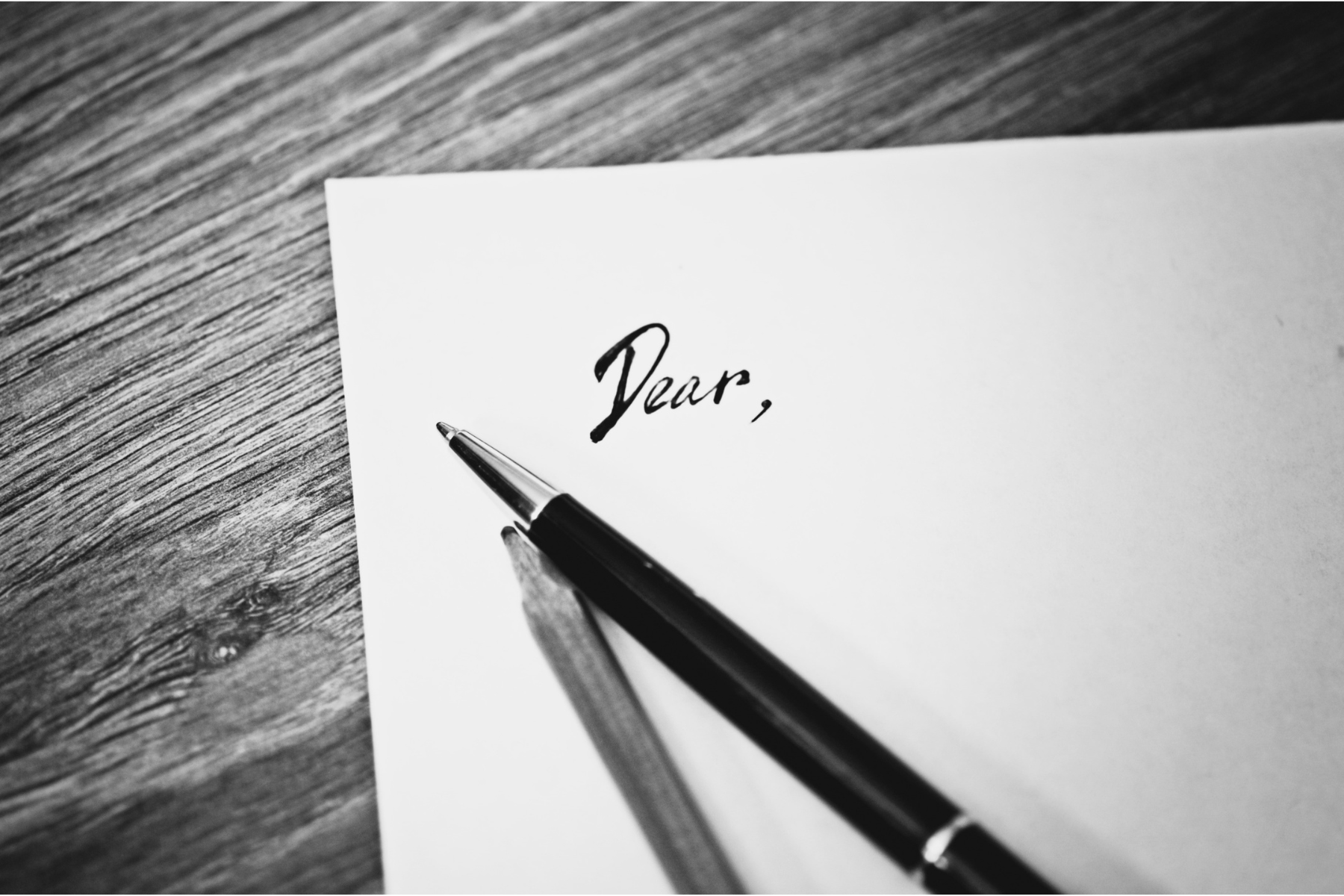
“The greatest distance between two people isn't measured in miles or years, but in the stories they've told themselves about one another.”
-Janet Hutchens
This morning, my father-in-law passed away.
He was 94 years old, sharp as a tack, and still calling the shots right up until the very end. He had been hoping to make it to his 95th birthday this coming January 17th, and knowing him, I'm quite certain he had every intention of doing just that!
For most of his life, he was remarkably physically fit. It was only over the past couple of years that his body began to slow down. By August, he was bedridden, but that didn't stop him from having physical therapists come in several times a week, fully convinced he could rebuild his muscles, regain his strength, and get himself moving again.
That was him. Determined, strong-willed, sometimes stubborn, and always convinced there was something he could do to improve the situation.
Over Labor Day weekend, I rallied the troops—all my children and grandchildren—and we made the effort to come together and visit him. It was an extraordinary weekend on so many levels, some of which I suspect each of us will come to appreciate and hold dear in our own way over the days, months, and years ahead. I'm profoundly grateful we made it happen.
But there's another part of this story I want to share with you, because it has everything to do with forgiveness, our deepest fears, and the stories we tell ourselves.
My Second Dad
You see, he was actually my ex father-in-law.
I divorced his son 24 years ago, and while the divorce was a shock and disappointment to both my in-laws and myself, we initially remained close and continued to support one another.
That relationship meant the world to me. Both of my own parents had passed away shortly after my in-laws came into my life, and in many ways, they became my second parents. I loved them as such, and I believed that regardless of what happened in my marriage, those relationships would remain.
But over time, things changed. There were disagreements, hurtful words, and issues involving money and possessions—or, as I sometimes think of it, money and stuff. Eventually, an estrangement developed that left me feeling as though I had been summarily pushed aside, no longer part of the family.
I was heartbroken. I blamed my ex-husband, assuming he was saying things about me that turned his family against me. Perhaps he was. Perhaps he wasn't. I blamed my father-in-law, believing that in his ever-protective way, he had circled the wagons, drawing his family closer and leaving me on the outside.
I made assumptions about what people were thinking, what was being said, and why they were behaving as they were. I believed I had been rejected by people I loved deeply, and I carried that belief with me for nearly 20 years.
My Fear of Abandonment
In his book The Big Leap, Gay Hendricks explores four hidden barriers that can keep us from fully experiencing success, happiness, love, and abundance. One of those is Disloyalty and Abandonment, and of the four, abandonment is the one that has always resonated most deeply with me.
It's a fear I've recognized in different areas of my life, and this experience touched it in a particularly painful way. I didn't simply feel that I had lost a relationship. I felt abandoned by people I had come to regard as my family, people who had filled a place in my heart after losing my own parents.
For years, I carried sadness, anger, disappointment, and a deep sense of rejection. I blamed others, made assumptions, replayed hurtful conversations, and carried a tremendous amount of anger, all the while allowing sadness and blame to take root—deeply.
In the story I had created, I was the victim. I was the one who had been wronged, pushed aside, and left behind. And for nearly two decades, I lived inside that story, convinced that someone else needed to do something to make it right.
The Flip of a Switch
But then one day, something shifted. It really was like flipping a switch.
I realized that while I couldn't change what had happened, what had been said, or how anyone else had behaved, I was the only person who could change how I was experiencing it.
For years, I had been waiting, in one way or another, for someone else to make things right. To apologize, acknowledge my hurt, recognize what I had lost, or simply make the first move. I believed that some action on their part was necessary before I could move forward.
Suddenly, I understood that it wasn't. I was the one keeping myself stuck in cement.
I needed to forgive. Not for him, or anyone else, but for me.
So I sat down and wrote my father-in-law a letter. I told him how much I missed him, how deeply I valued our relationship, and how I had always thought of him as my second dad. I shared how much I wished we could find our way back to one another.
I had no idea how, or even if, he would respond. He might ignore the letter, dismiss it, or feel entirely differently about our relationship than I did. But I realized that his response wasn't the point. The point was that I was finally willing to put down the pain I had been carrying for so long. And writing that letter gave me a way to release it—all that low vibrational energy I had been tightly locked inside myself. It was freeing.
I've come to understand that forgiveness doesn't require us to forget what happened or pretend that it didn't matter. Oh, believe me, I still remember the words, the actions, and the events that caused so much pain—in remarkable detail, I might add!
But remembering something and continuing to give it power over your life are two very different things.
Forgiveness doesn't erase the past. It changes the weight of what we carry forward.
We can acknowledge what happened without continually reliving it. We can recognize that someone hurt us without requiring them to spend the rest of their lives making amends. We can even restore relationships, love someone deeply, and genuinely enjoy their company without rehashing every old disagreement.
That doesn't mean abandoning our boundaries or tolerating ongoing mistreatment. It means understanding that we are all human. We make mistakes, react out of fear, protect what we believe needs protecting, and sometimes behave in ways that cause hurt without fully realizing it.
We can simply forgive ourselves for the years we've spent carrying that hurt to start the shift.
One Letter Changed Everything
Within days of sending my letter, my father-in-law called me. We shared a beautiful, tearful conversation and agreed that I would visit shortly thereafter.
Over the past few years, I've gone to see him a number of times. We played golf and laughed at just how good we both were at it! We enjoyed dinners together, shared stories, reminisced, and looked through what seemed like endless photo albums. The man loved his photographs, and being an accountant, naturally, they were all meticulously cataloged—bookcases of them!
We laughed a lot, and through those visits, we rediscovered just how much we loved and valued one another. It wasn't about pretending the past hadn't happened. It was about realizing that our relationship could be so much more than the years of hurt and misunderstanding that had come between us.
And as an unexpected benefit, my letter also helped heal my relationship with my former sister-in-law. In fact, today we're probably closer than we've ever been.
But there's one moment from that very first visit that has stayed with me, perhaps more than anything else.
Twenty Years. Two Completely Different Stories.
As I was leaving that first visit, my former sister-in-law gave me a hug and said something I'll never forget.
"We thought you didn't want to have anything to do with us anymore. I'm so glad you came back."
I remember leaning back, looking at her, and saying, "Wow. I thought it was the other way around, that you guys didn't want to have anything to do with me."
Think about that for a moment.
Nearly 20 years had passed, and here we were, two sides of the same family, each believing the other had walked away. We had both been carrying our own version of what happened, making assumptions about what the other was thinking and feeling, and allowing those assumptions to become our truth.
Neither of us had the whole story.
And it was in that moment, standing there with my former sister-in-law, that another realization hit me.
In my fear of being abandoned, I had actually abandoned them.
For nearly 20 years, I had believed they didn't want me in their lives. And because I believed that, I had withdrawn, stopped reaching out, and waited for someone else to make the first move. I saw myself as the victim, the one who had been rejected and abandoned, never realizing that from their perspective, I was the one who had walked away.
Isn't that interesting?
The very thing I feared most was the thing I had unknowingly helped create.
When Our Fears Become Self-Fulfilling Prophecies
That doesn't mean the original disagreements and hurtful experiences weren't real. They were. But I had spent years allowing those experiences to define the entire relationship, and in doing so, I had helped perpetuate the distance between us.
What struck me most was that neither side knew what the other was truly thinking or feeling. We had each created our own version of the story and then lived according to it.
I often wonder how much time we lost to those assumptions.
How many conversations never happened because we each believed the other didn't want them?
How much love did we keep at arm's length because we thought it was no longer welcome?
And how often do we do exactly this in our own lives?
We fill in the blanks when we don't have all the information. We assign meaning to someone's words, actions, or silence. We interpret situations through the lens of our own experiences, insecurities, and fears. And before long, the stories we've created become so familiar that we stop questioning whether they're actually true.
The greatest distance between two people isn't always physical. It may be the story each has been telling themselves about the other.
What if someone you believe has rejected you feels rejected by you?
What if the distance you've interpreted as indifference is actually someone else's hurt?
And what if the love you thought was lost has been there all along?
You've heard me say it before: A little communication goes a long way.
And sometimes, that communication has to begin with an honest conversation with ourselves.
The Abundance of What We Reclaimed
I talk a great deal about abundance, and while much of my work focuses on our relationship with money, I've always believed that true abundance encompasses so much more.
It's the richness of our relationships, the freedom to be who we are, the peace that comes from releasing what weighs us down, and the ability to give and receive love without keeping score.
When I wrote that letter, I had no guarantee of reconciliation. I didn't know whether my father-in-law would respond, whether he still thought of me as family, or whether our relationship could be restored. But I knew I didn't want to carry that pain anymore.
I chose to release the hurt without knowing what I might receive in return.
And what I received was extraordinary.
I got my second dad back. Not the 20 years we had lost—those were gone—but the years we still had. Years filled with laughter, dinners, stories, photographs, and the comfort of knowing how much we meant to each other.
I also received a renewed relationship with my former sister-in-law, more family connection, and a kind of peace I hadn't realized I'd been missing.
That one decision created a ripple effect far beyond what I could have imagined.
It May Not Be Heaven, But You Can See It From There
There's one more part of this story that feels especially tender to me today.
For a week now, I've been working on a painting for my father-in-law. It's of Livingston Lake, a place he loved more than anywhere else in the world. I was planning to finish it and send it to him this coming Monday or Tuesday, but sadly, I didn't get it to him before he passed.
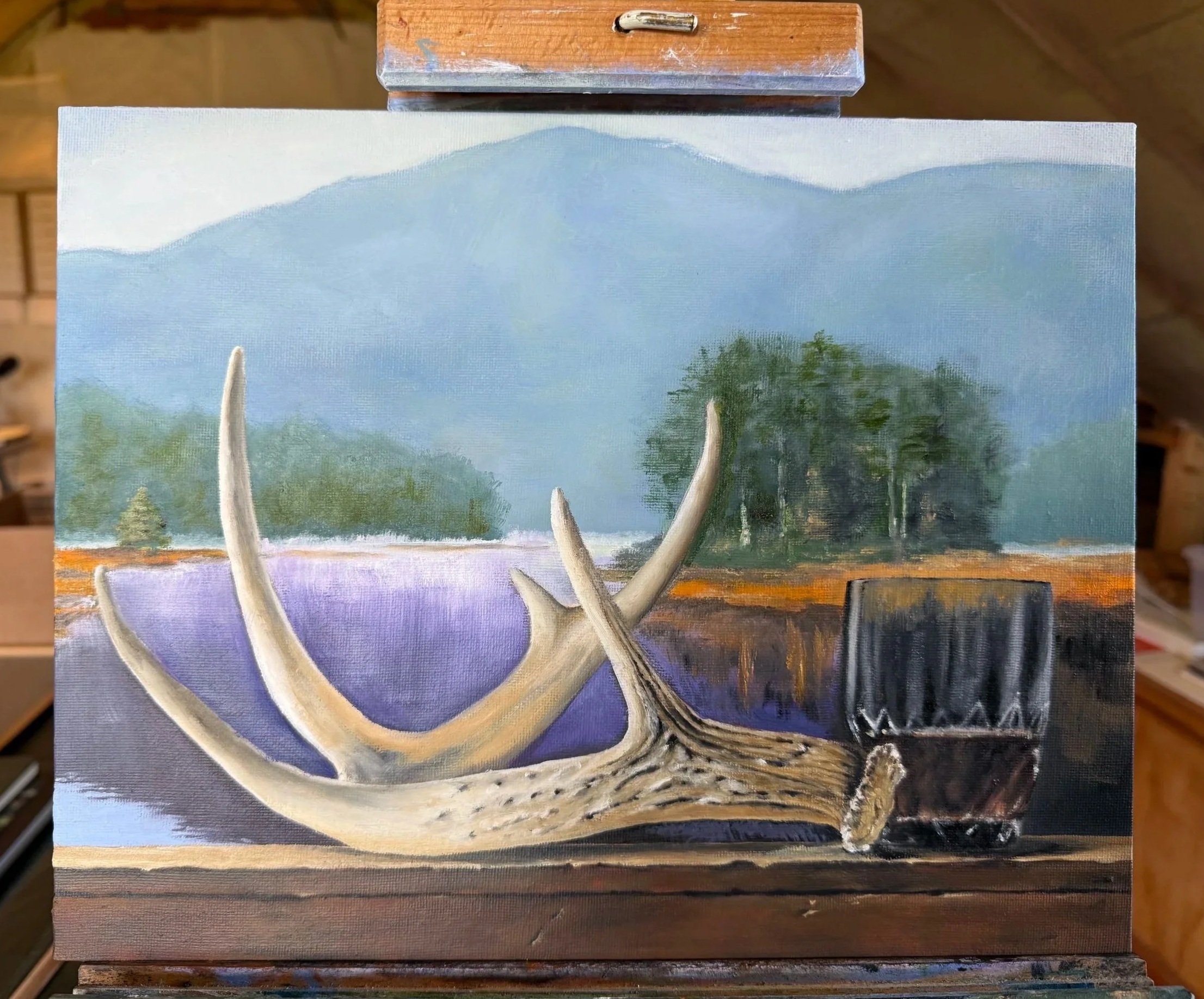
He was an avid hunter of North American big game, and Livingston Lake was one of his most beloved places to hunt whitetail deer. The antler in the painting is a nod to that lifelong passion, and the glass of whiskey represents the pleasure of sitting back and enjoying a drink after a day's hunt.
I'll be adding a dragonfly, a tribute to my mother-in-law, who passed away about five years ago. She loved dragonflies, and she loved hunting alongside him. It feels fitting to include her in the scene, a quiet acknowledgment of their shared love of that place and the life they built together.
He used to say of Livingston Lake, "It may not be heaven, but you can see it from there."
And yes, that is the title for the painting.
There's something especially poignant about those words today. While he didn't get to enjoy the painting during his human experience, I know in my heart that he'll be right there with me, guiding me as I put on the finishing touches.
While I'm naturally a touch disappointed that he never got to see it, I so enjoyed thinking about him as I worked on it, imagining his reaction, and remembering how much that place meant to him.
And as I reflect on this gift, I'm reminded that we don't always get to finish everything we intend to do, say everything we hope to say, or deliver every gift we've been planning. Life doesn't always wait for our Monday or Tuesday.
However he did get to receive something far more important. He knew how much I loved him. We had the opportunity to say it, to show it, and to spend time together again.
Forgive. Heal. Love.
Forgive by giving yourself permission to release the pain you've been carrying. Not because what happened was okay or because someone else deserves to be absolved, but because you deserve to be free of its weight.
Heal by allowing yourself to move forward rather than continuing to live inside what happened years ago. Recognize the stories you've created, question the assumptions you've made, and allow yourself the possibility of a different experience.
And love. Love even when relationships are complicated, when people are imperfect, and when the past hasn't unfolded the way you wished it would.
We don't have to erase our experiences or disregard what we've learned. Perhaps we can give the past a little less weight and the present a little more attention.
This morning, I lost my second dad. But I didn't lose him with 20 years of unresolved hurt between us. I lost him knowing that he knew how much I loved him, and knowing that he loved me.
I have the memories of our visits, the laughter, the photographs, the conversations, and that extraordinary Labor Day weekend when my children and grandchildren came together to spend time with him.
I couldn't have known, when I wrote that letter, how much time we would have left. I'm simply grateful that I wrote it.
So I'll leave you with a question.
What are you still carrying that is weighing down your heart, and what might become possible if you chose to put some of that weight down?
Perhaps there's a conversation you've been avoiding, a relationship you've been missing, or a story you've been telling yourself that deserves another look.
You don't have to know how the story will end to choose a new beginning.
With love and light,
— Janet Hutchens
“We cannot reclaim the years we've lost, but we can fill the years we're given with love.”
-Janet Hutchens